

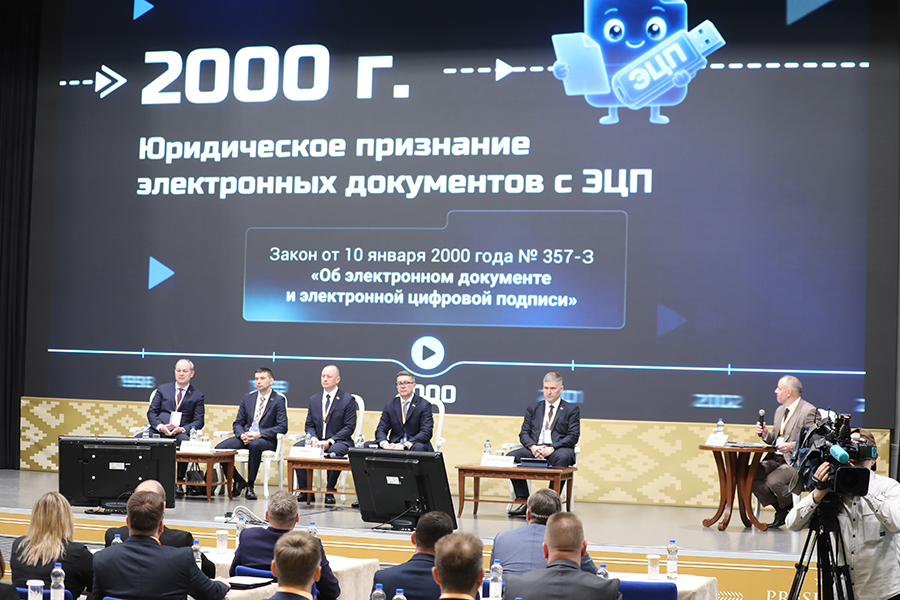
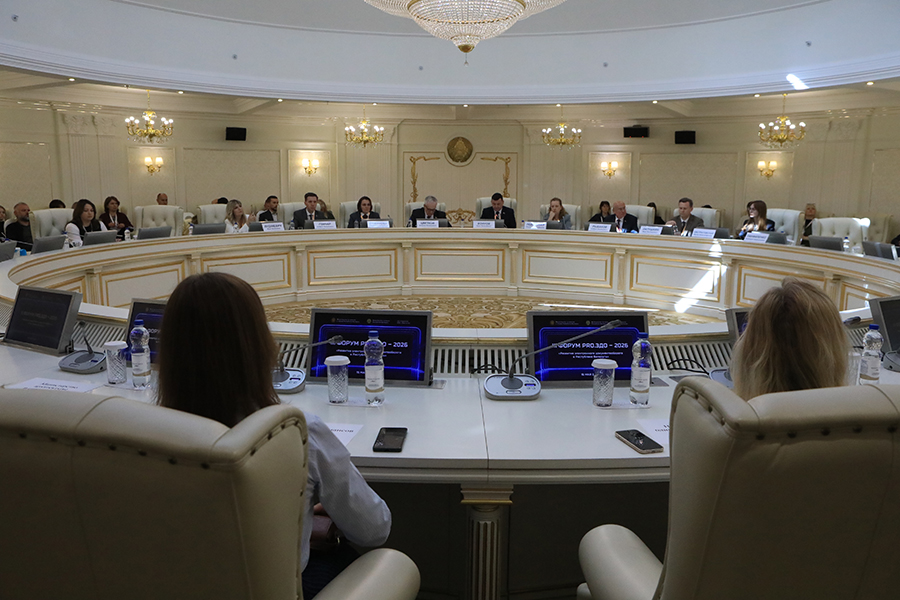
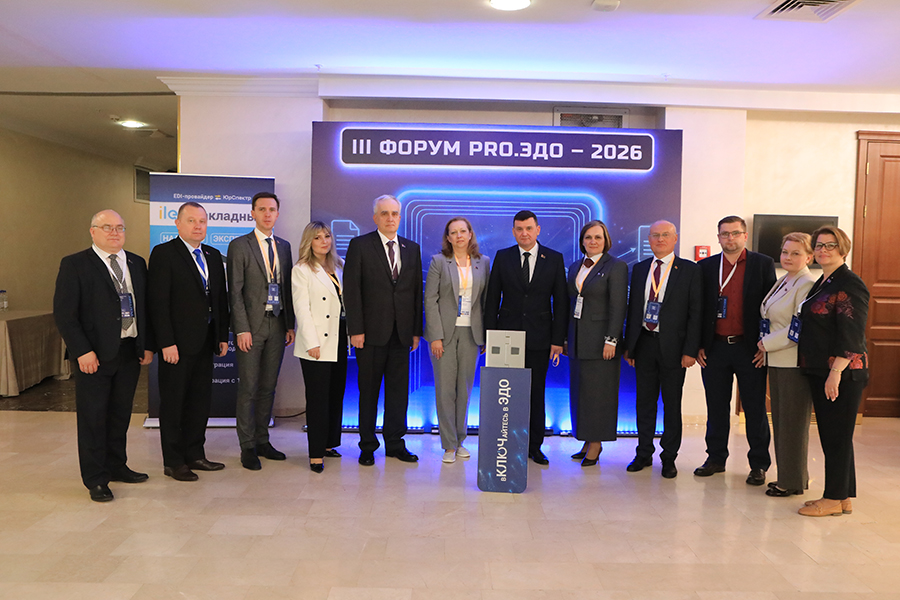
The third PRO.EDO-2026 forum «Development of electronic document management in the Republic of Belarus» was held on May 15, 2026.
The event brought together representatives of government agencies, the business community, the notary public, and participants in digital transformation to discuss key issues of transition to a digital state, where everyday life, economics, law, and governance operate based on digital platforms and electronic mechanisms.
The Department of Archives and Records Management of the Ministry of Justice of the Republic of Belarus organized a separate section «Modern models of electronic archive and preservation of electronic documents» within the framework of the forum.
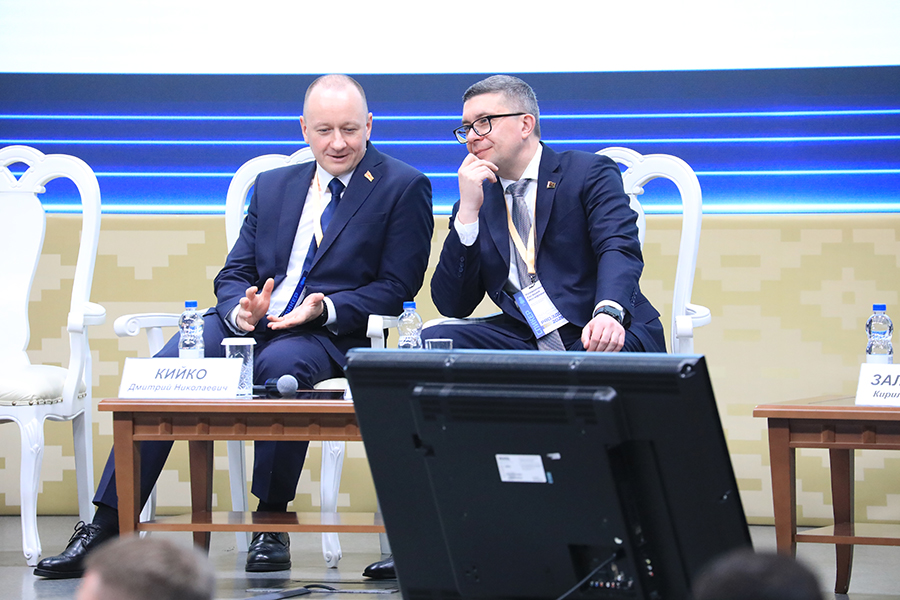
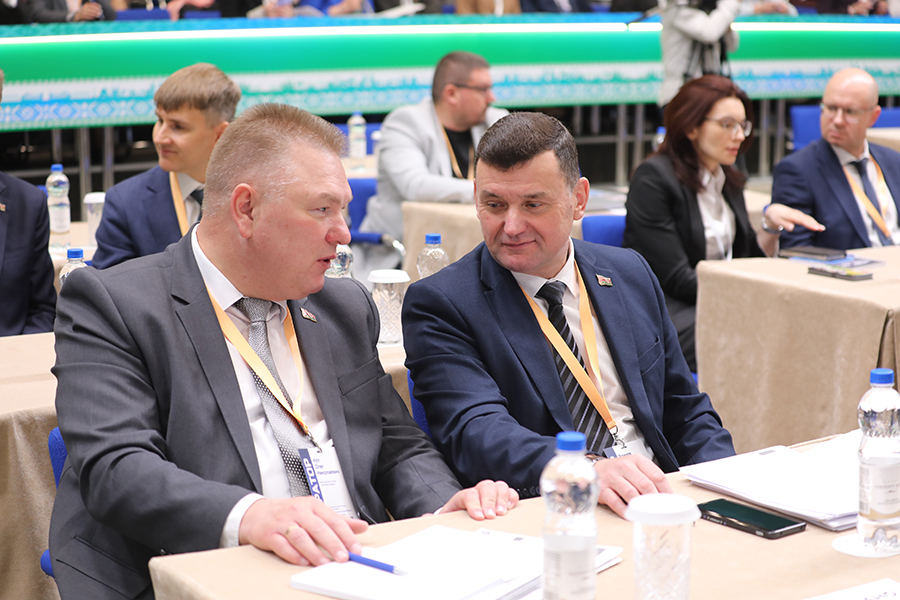
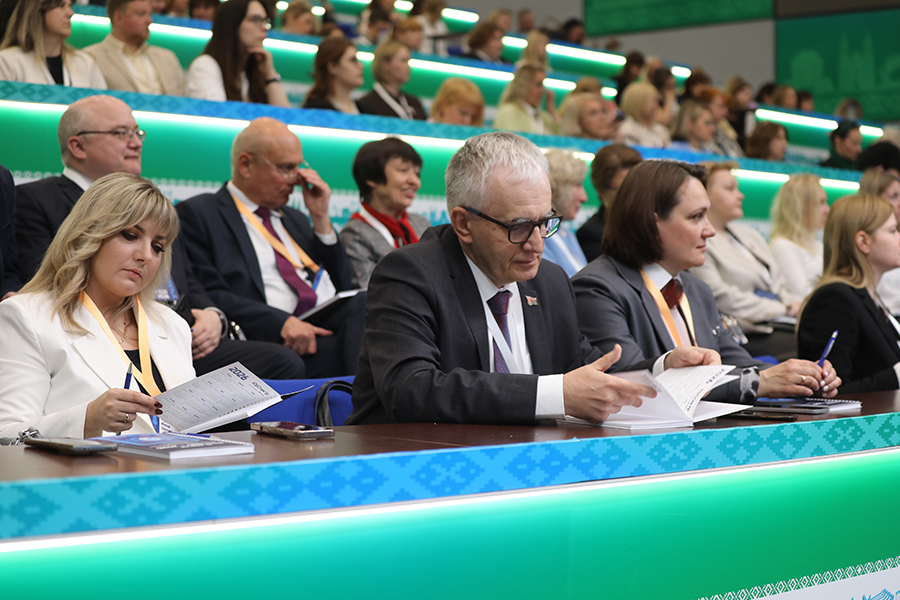
91 people took part in the work of the section: representatives of republican government bodies, state archival institutions.
Representatives of the regional state archives were connected online in the regional studios.
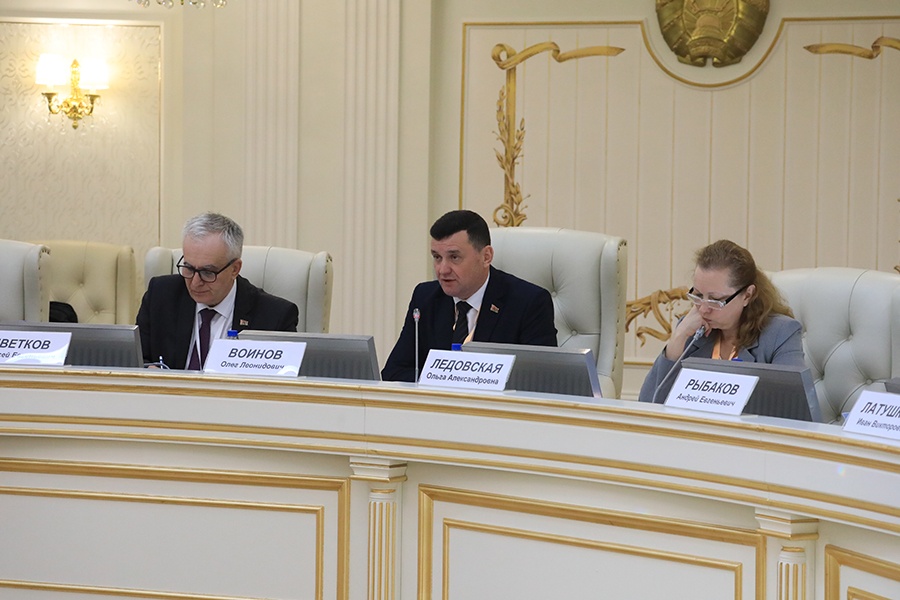
The moderator of the section was O.L.Voinov, Director of the Archives and Records Management Department of the Ministry of Justice of the Republic of Belarus.
Four main blocks were identified within the section:
Electronic archives: stages of development, problems and prospects (state, departmental and operational storage of electronic documents).
Legislation and requirements: modern approaches to the creation and operational storage of electronic documents (the experience of Belarus and Russia).
The practice of implementation in organizations: organization of electronic document management and transfer of documents to the electronic archive using the examples of the Ministry of Economy and GPO Belenergo.
The development of state archives in the digital age: approaches to the management and preservation of digital materials using the example of the Belarusian State Archive of Film and Photographic Documents and the Zonal State Archive in Molodechno.
The participants considered the topic in the format of a comprehensive discussion of the current challenges of digital archiving, including the development of electronic archives, legislative requirements and practical approaches to ensuring the safety of electronic documents.
A special emphasis in the discussion was placed on:
– the need for strict compliance with the requirements at the stages of creation, formation and storage of electronic documents;
– issues of ensuring the operational and permanent storage of electronic resources of the National Archival Fund;
– the role of information systems in maintaining records and access to documents;
– the development of modern digital approaches, including the use of artificial intelligence technologies in archival activities.
Following the results of the section, the participants noted that effective development of electronic archives is possible only with coordinated work in three areas: regulatory framework, technological readiness and high-quality organization of storage processes that ensure the safety and accessibility of electronic documents for a long time.
Reports were presented at the section:
«Electronic archives: stages of development, problems and prospects» (Olga Alexandrovna LEDOVSKAYA, First Deputy Director of the Archives and Records Management Department of the Ministry of Justice of the Republic of Belarus);
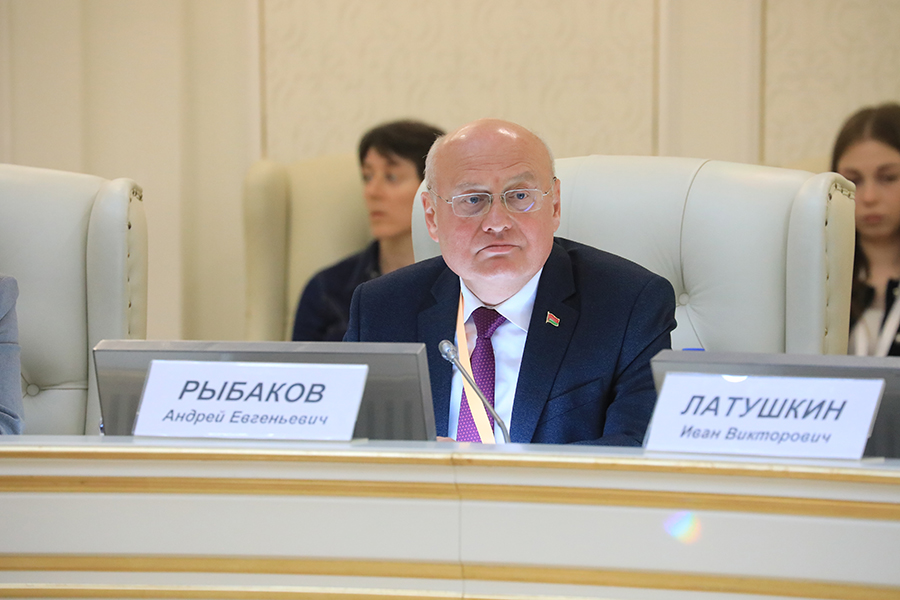
«Modern requirements for the creation and operational storage of electronic documents» (Andrei Evgenievich RYBAKOV, Director of the Belarusian Scientific Research Institute of Documentation and Archival Affairs, Candidate of Historical Sciences);
«Electronic documents: problems, prospects and solutions in the Russian Federation» (Pavel Alekseevich KYUNG, Director of the All-Russian Scientific Research Institute of Documentation and Archival Affairs, Candidate of Historical Sciences (online);
«AIS Departmental Archive is an effective tool for departmental storage of electronic documents» (Irina Aleksandrovna EVSTRATOVSKAYA, Deputy Sales and Customer Service Department of RUE National Center for Electronic Services);
«Improvement of the electronic document management system and organization of archival storage of electronic documents in GPO Belenergo» (PANFILENKO Victoria Anatolyevna, Head of the Department of Control and Office Management of the State Production Association of Electric Power Industry Belenergo);
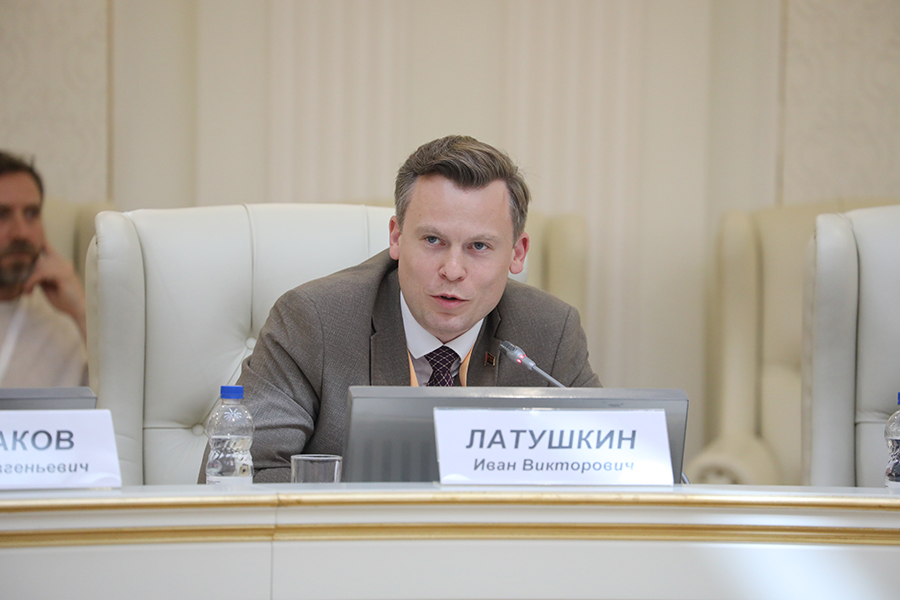
«Organization of electronic document management in the Ministry of Economy: the path from creation to transfer to the electronic archive» (LATUSHKIN Ivan Viktorovich, Head of the Main Department of Control and Records Management of the Ministry of Economy);
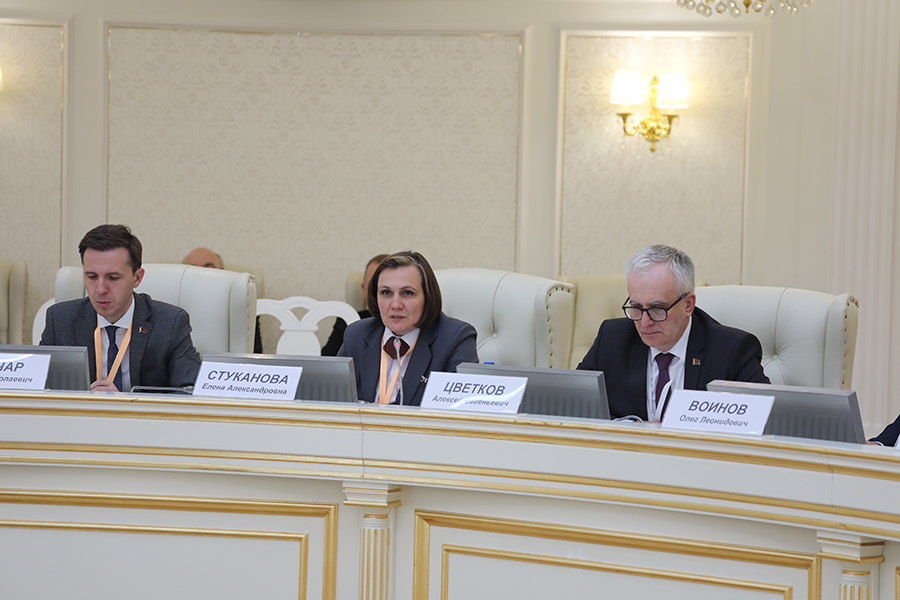
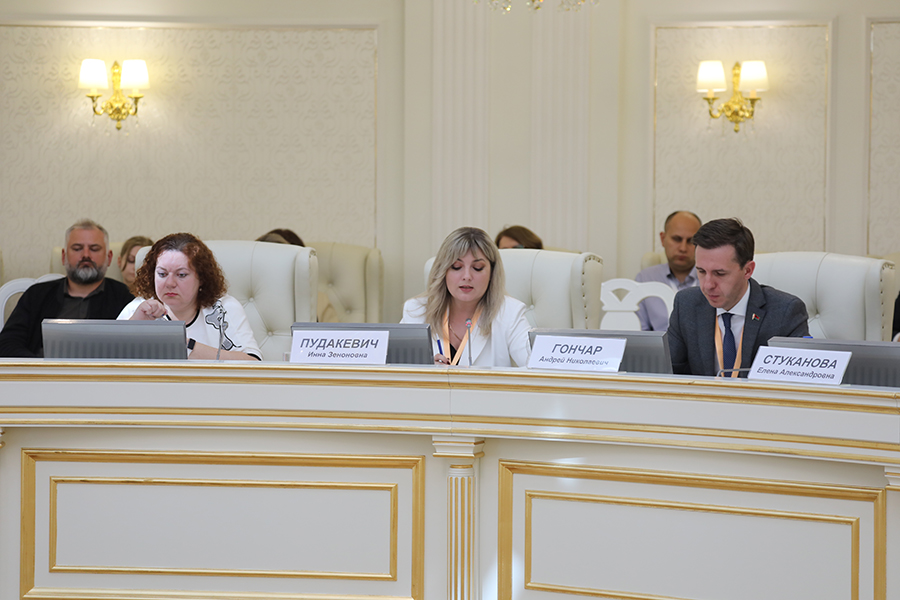
«Ensuring permanent storage of electronic documents of the National Archival Fund» (STUKANOVA Elena Aleksandrovna, Deputy Director of the National Archives of the Republic of Belarus);
«Management of the audiovisual Heritage in the Digital Age: system integration of modern technologies into the processes of the Belarusian State Archive of Film and Photographic Documents» (GONCHAR Andrey Nikolaevich, Director of the Belarusian State Archive of Film and Photographic Documents);
«The use of artificial intelligence technologies in working with archival documents» (Inna Zenonovna PUDAKEVICH, Director of the Zonal State Archive in Molodechno).
Special attention in the work of the section was paid to the transition from paper documents to electronic ones.
It was emphasized that the republic has created a legal and organizational base for storing electronic documents. In 2022, amendments were made to the legislation on archiving and record keeping, defining the procedure for storing electronic documents, as well as the modernization of the information system of the electronic document archive.
At the same time, it was noted that the creation of electronic files without paper analogues is currently not being actively conducted. In this regard, it is planned to adjust the legislation: it is planned to define a list of documents that should be kept only in electronic form, as well as to consolidate the obligation of government agencies and organizations to optimize document management and ensure the transition to the creation of electronic documents without paper analogues (at least 50% by January 1, 2030).
Results:
The participants of the section emphasized that electronic document management has ceased to be just a technological initiative: it is becoming a mandatory standard for faster, more transparent and secure interaction. The purpose of the event is not only to share experiences, but also to form practical solutions that will simplify working with documents and strengthen the digital infrastructure of the state.
 |
 |
 |
 |
 |
 |
 |
 |
 |
 |
 |