

A tourist trip to Polesia for staff of the National Historical Archives of Belarus
During the last autumn weekend, staff of the National Historical Archives of Belarus, as part of a large excursion group, took a fascinating tour of Pinsk, the capital of Belarusian Polesia, and learned about the craft traditions and folk culture of the Polesians in the agro-town of Motol. The trip was organized by the Minsk City Organization of the Belarusian Trade Union of Employees of State and Other Institutions.
Pinsk is an ancient city nestled among the beautiful landscapes of the Pina and Pripyat rivers. The city has been known since 1097. In terms of the preservation of its architectural monuments, it ranks second in Belarus after GrodNo.The city center is shaped by stone structures erected in the 17th and 18th centuries, including the complex of an ancient Franciscan monastery; the cathedral with its exquisite façade decoration and magnificent organ; and the sculptural forms of the Jesuit College. The tour began in the square in front of the Jesuit College and continued in the courtyard at the entrance to the Belarusian Polesie Museum.
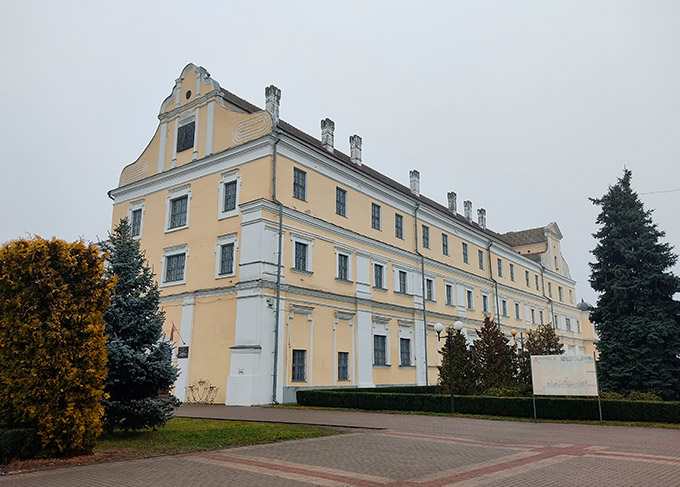 |
| 1. The building of the Jesuit College in Pinsk |
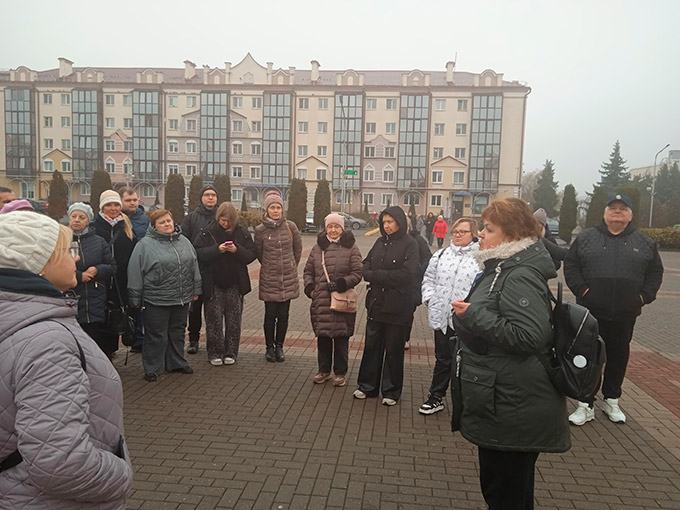 |
| 2. In Lenin Square |
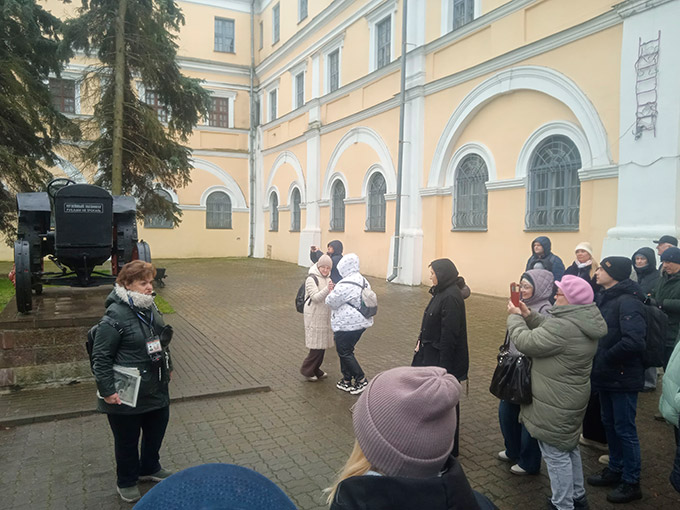 |
| 3. At the Museum of Belarusian Polesie |
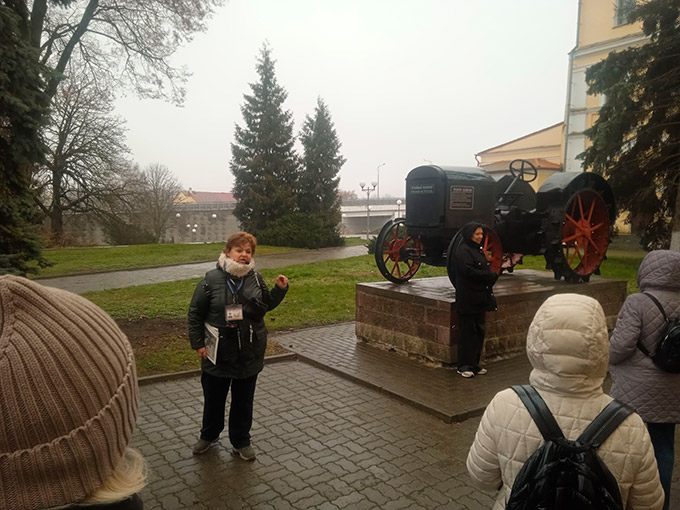 |
| 4. Viewing the pre-war SHTZ-15/30 tractor – one of the exhibits at the Museum of Belarusian Polesie |
In the historic center of the city, near the city park, the full-flowing Pina River and one of Belarus’s largest rivers, the Pripyat, spectacularly merge and then separate again.
The tour group strolled along the picturesque embankment.
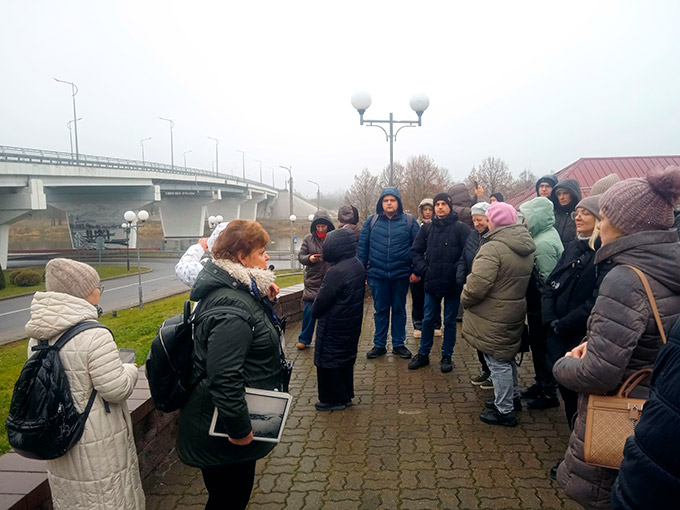 |
| 5. At the embankment |
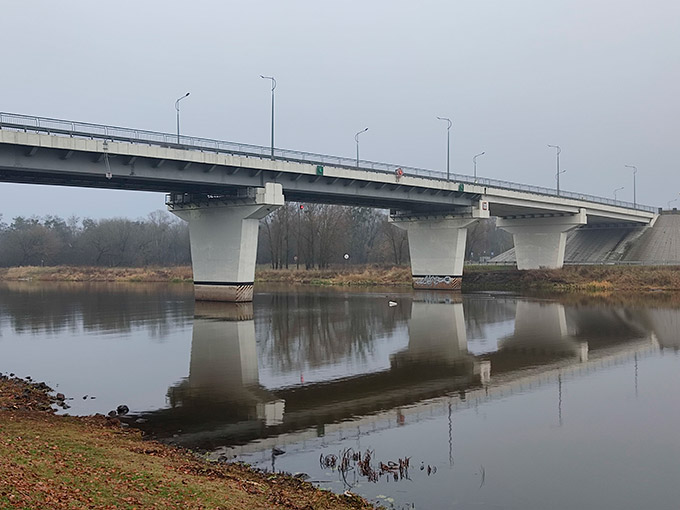 |
| 6. Bridge over the Pina River |
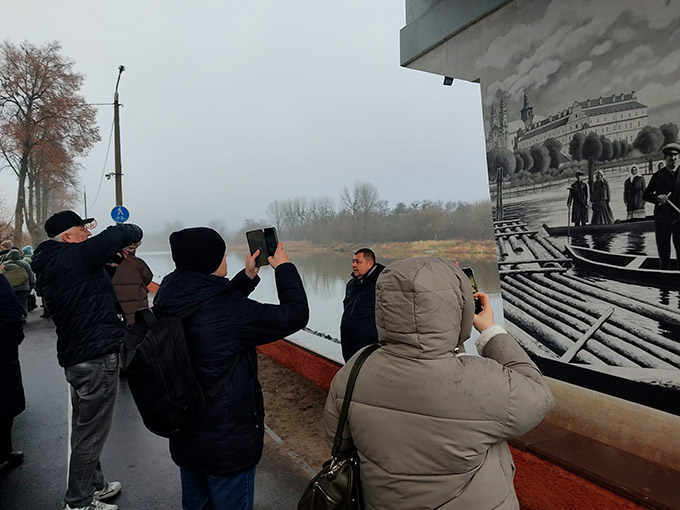 |
| 7. Walking along the embankment |
The Church of the Blessed Virgin Mary is one of Pinsk’s main attractions and an important Catholic shrine in Belarus, built in the Baroque style between 1706 and 1730. Unique frescoes—»The Adoration of the Magi» and «The Pinsk Madonna» by Alfred Remer—can be found on the altar walls. Father Onufriy, a monk of the Order of St. Paul the First Hermit, led guests on a short tour of the church.
The church’s interior and the sound of the organ left no one indifferent.
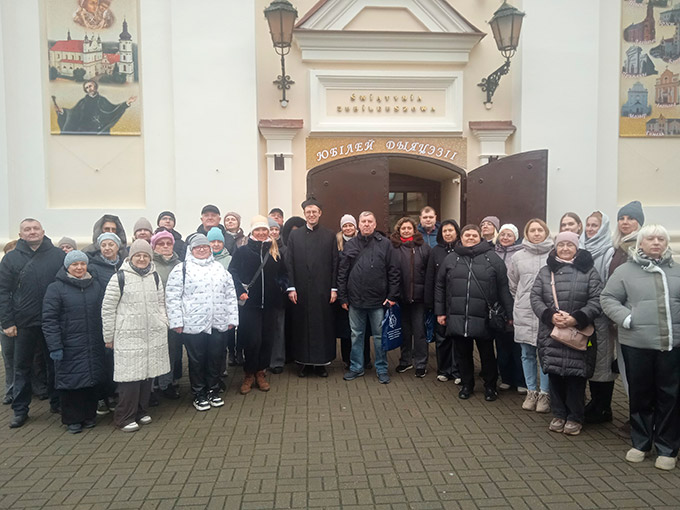 |
| 8. At the entrance to the Church of the Blessed Virgin Mary |
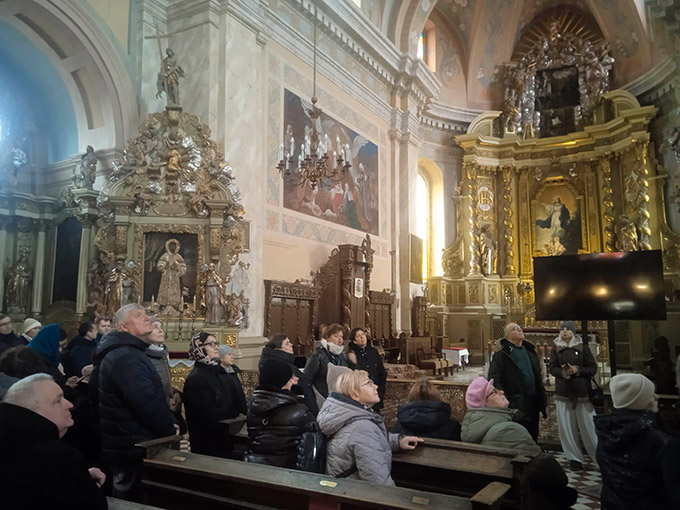 |
| 9. Viewing the church |
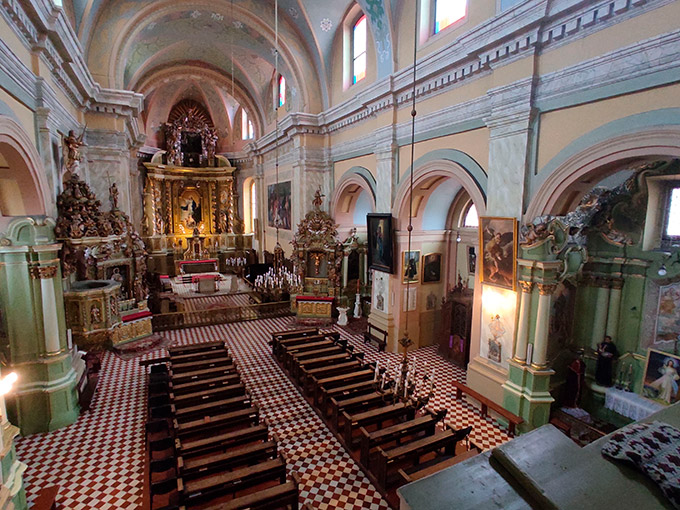 |
| 10. The interior of the church |
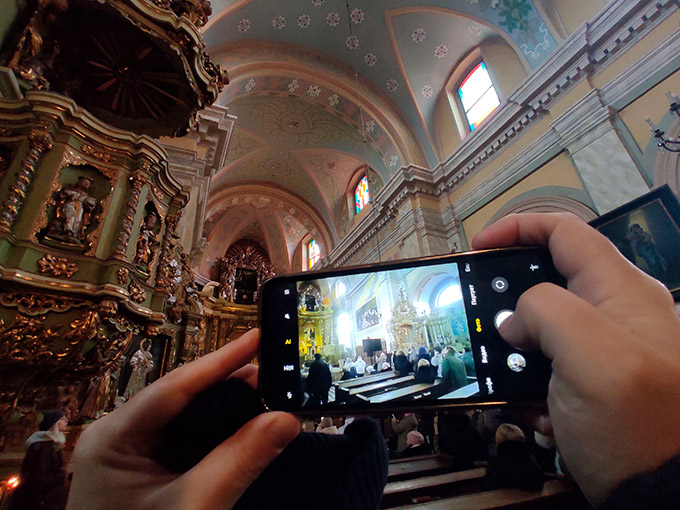 |
| 11. Under the vaults of the church |
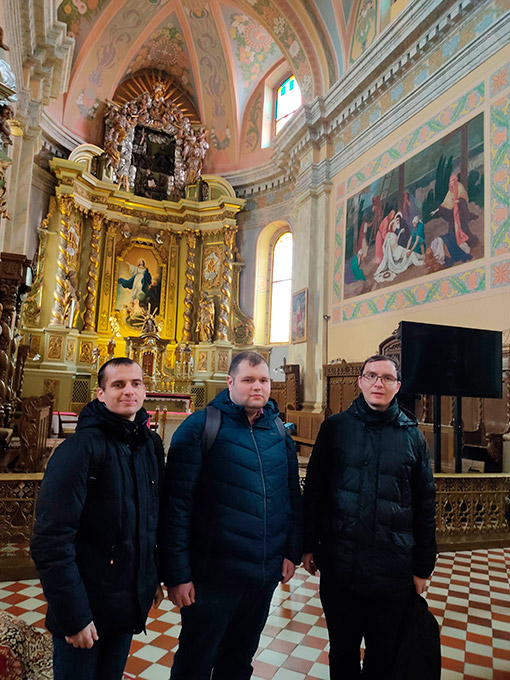 |
| 12. Employees of the National Archives of Belarus at the altar of the church |
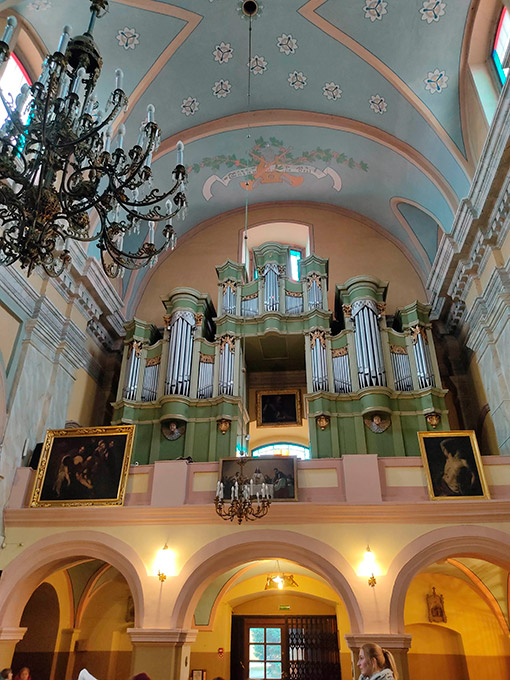 |
| 13. The organ in the church |
Pinsk’s oldest street, originally known by many names (Bolshaya Spasskaya, Bolshaya Franciskanskaya, Bolshaya Kyiv, Kosciuszki Street), has been called Lenin Street since 1939. It has always been the center of city life, home to the finest homes, banks, shops, and hotels. Every building on the street is a historical and cultural treasure, featuring examples of late 19th- and early 20th-century architecture.
Our group enjoyed strolling along this ancient street. Everyone tried to take photos of themselves against the backdrop of the landmarks of this cozy and welcoming city.
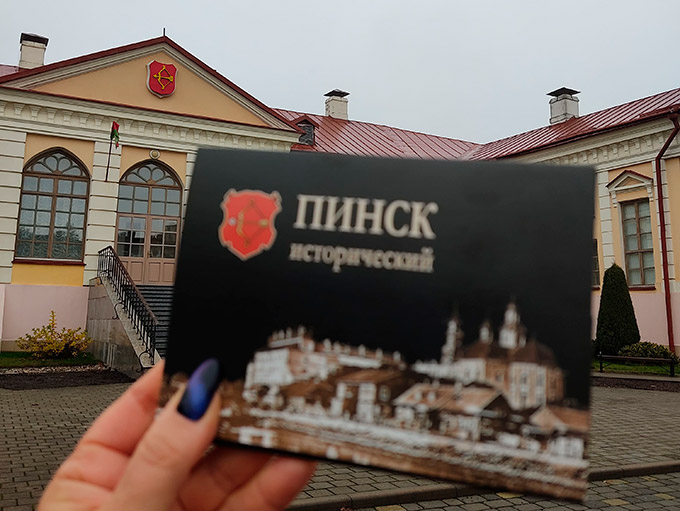 |
| 14. The Palace of Mateusz Butrymovich Currently – the Civil Registry Office of the Pinsk City Executive Committee |
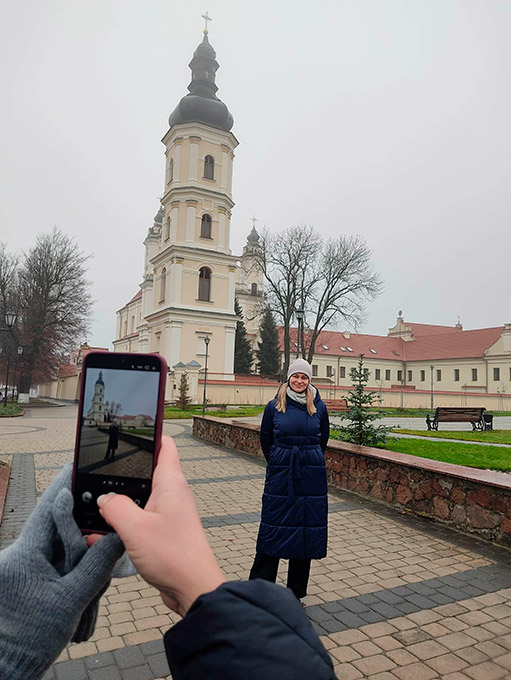 |
| 15. At the Franciscan Monastery |
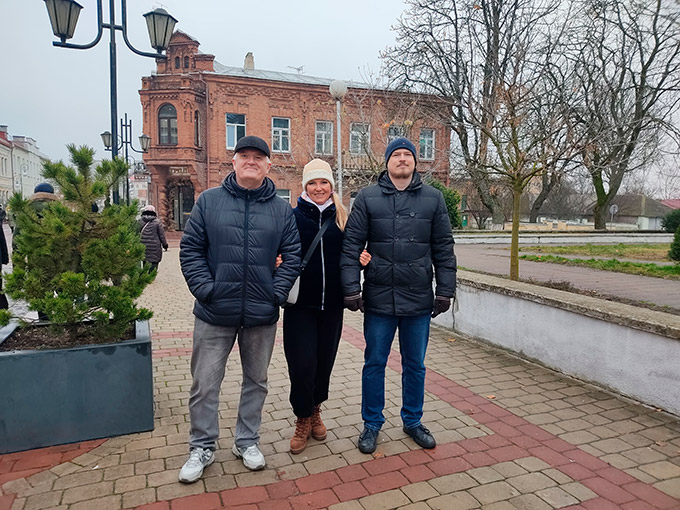 |
| 16. Management of the National Information Agency of Belarus |
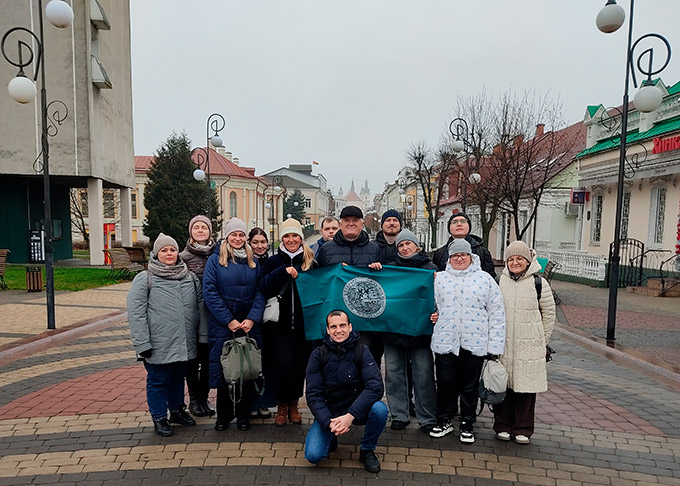 |
| 17. The staff of the National Information Agency of Belarus |
By the way, in the very center of the pedestrian street is a cozy bakery where you can try none other than authentic Czech buns made from rich dough and topped with a fragrant cinnamon, nut, and sugar coating – trdelník (or trdlo).
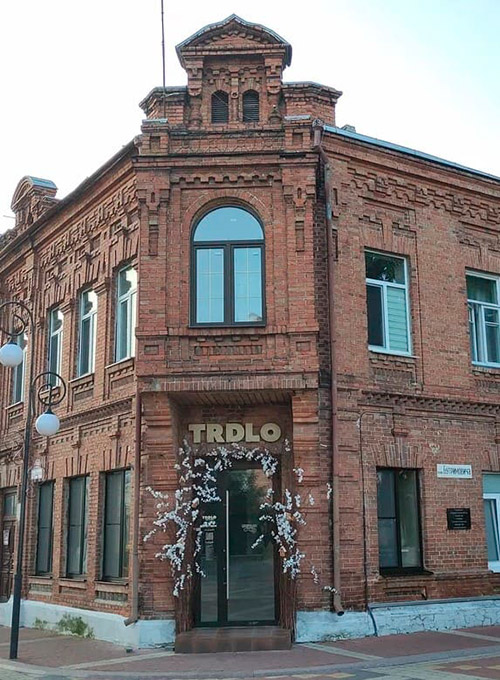 |
| 18. The TRDLO coffee shop |
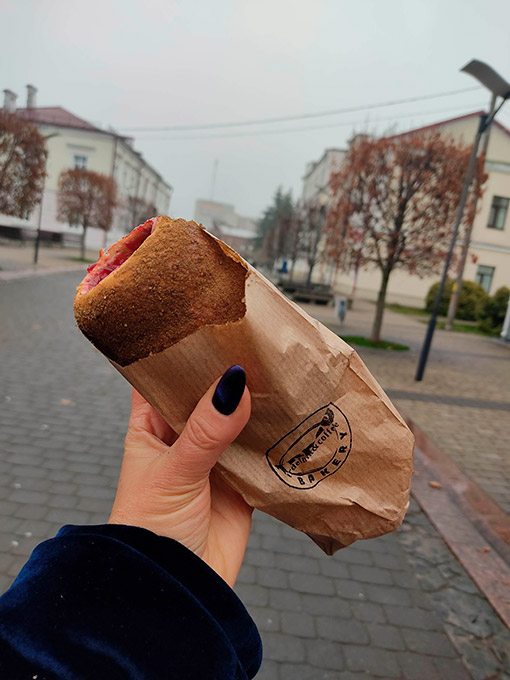 |
| 19. A delicious trdelnik (a type of bread) |
A fascinating part of the trip was exploring the main tourist «gem» of the Ivanovo district – the regional folk art museum in the town of Motol. It was here that the first president of the State of Israel, Chaim Weizmann, lived. Motol is also called the culinary capital of Polesia. The local folk art museum contains unique exhibits, displayed in thematic exhibitions on the history of the town, its crafts, clothing, rituals, folk traditions, and more.
A tour of the museum and the concert and ritual program «Zhyvy Guk» allowed us to immerse ourselves in the unique culture of the Polesians, and a hearty tasting of «Motalskiya Prysmaki» (Motal Prysmaki) enhanced this experience.
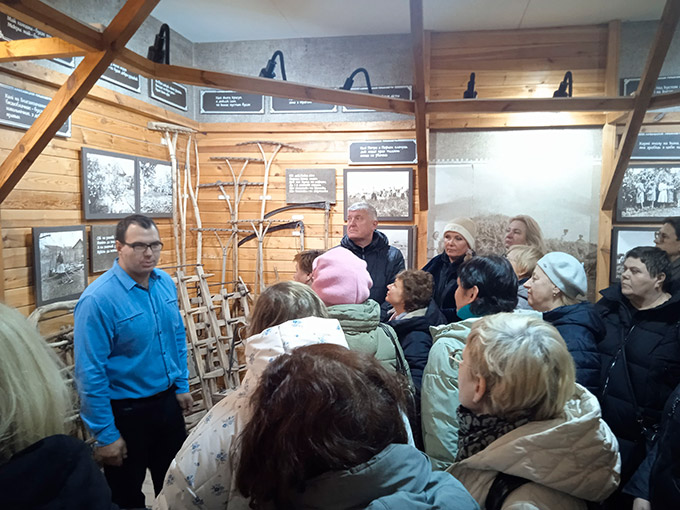 |
| 20. At the Motol Museum of Folk Art |
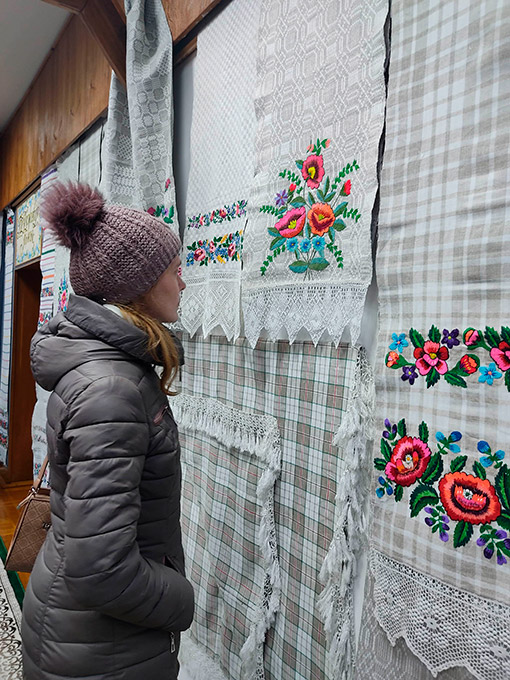 |
| 21. A tour of the museum exhibits |
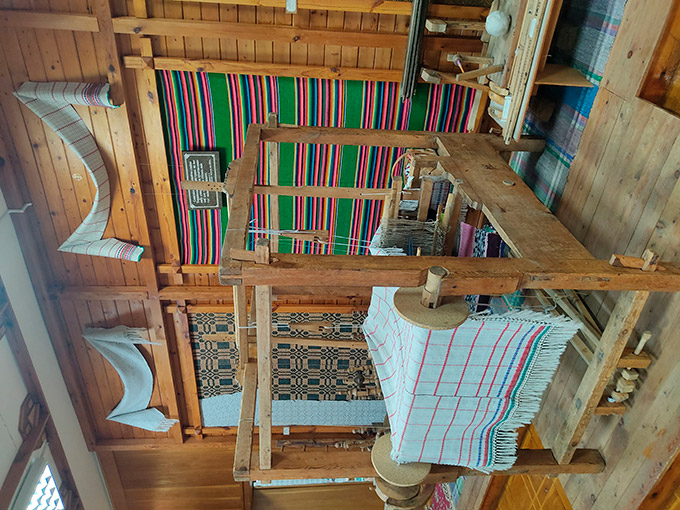 |
| 22. A model of a weaving loom |
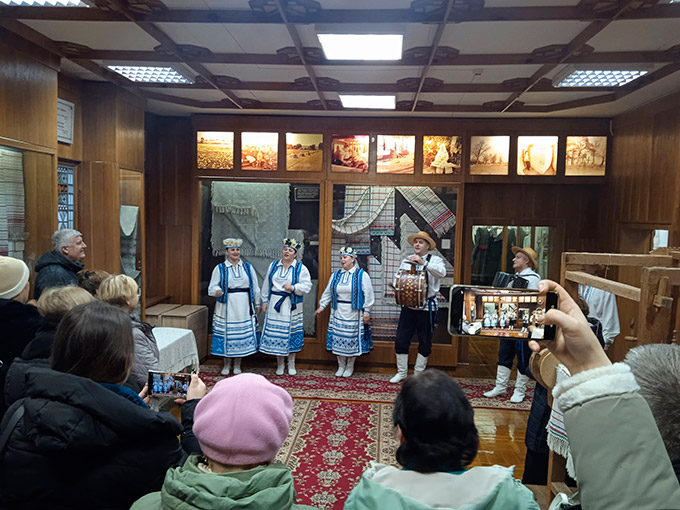 |
| 23. The concert and ritual program «Zhyvy Guk» |
Experiencing the rich cultural heritage and magnificent landscapes of Polesia left a lasting impression and filled us with energy and optimism.