

Opening of the Second Documentary Exhibition in the «Improvement of the Country through the Lens of Time» Series at the National Archives of the Republic of Belarus
On October 25, 2025, the second documentary exhibition in the «Improvement of the Country through the Lens of Time» series opened at the National Archives of the Republic of Belarus (hereinafter NARB).
The Nazi invaders and their accomplices inflicted irreparable damage to the national economy of the BSSR. As early as October 1944, the first community service day (Voobshchnik) was held in Minsk, attended by approximately 33,000 residents. In one day, 1.3 million bricks were dismantled, cleaned, and stacked, over a ton of various building materials were collected, and approximately 2,000 cubic meters of crushed stone were prepared.
In 1946, the BSSR adopted a law on a five-year plan for the restoration and development of the national economy of the republic for 1946-1950. Belarus faced significant difficulties: labor shortages, delays in the delivery of equipment and energy capacity, and international aid, which came from a variety of sources (in addition to reparations, resources came from other Soviet republics).
Between 1951 and 1955, 150 large industrial enterprises and over 200 medium and small ones were commissioned in the BSSR: the Minsk Bearing and Watch Factories, a Radio Factory, a Heating Equipment Plant, a Worsted Mill, a Sewing Machine Factory in Orsha, a Sugar Refinery in Skidel, and the Vitebsk Silk Weaving Factory, among others. During the Five-Year Plan, gross industrial output more than doubled, while heavy industry continued to grow predominantly.
In the 1960s, instrument-making, electronics, radio electronics, and mechanical engineering developed rapidly. The Berezovskaya Power Station was commissioned, making it possible to create a unified Belarusian energy grid. The First Potash Plant in Soligorsk, the Grodno Nitrogen Fertilizer Plant, the Novopolotsk Oil Refinery, and several other large enterprises began operations.
In the late 1980s and early 1990s, Belarus saw a rapid growth of dacha settlements, which were built haphazardly, without a unified plan. During this period, work was carried out to improve communities, build and repair roads, plant green spaces, and create recreation areas. Much attention was paid to landscaping, creating and maintaining green spaces in cities and towns.
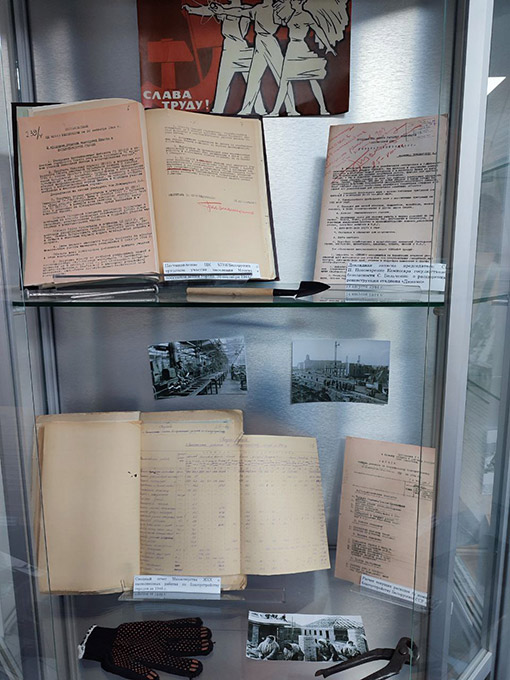
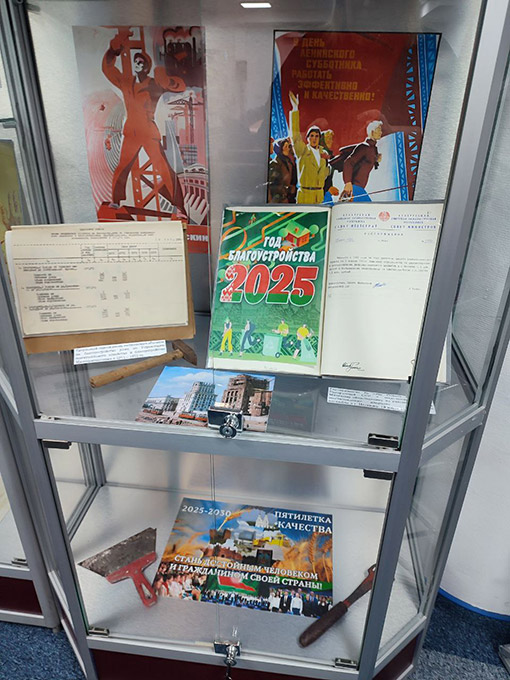
NARB presented authentic archival documents from 1945 to 1990 at the exhibition: the Resolution of the Central Committee of the Communist Party (Bolsheviks) of Belarus on the labor participation of the population of Minsk in the reconstruction of the city in 1944; Resolutions of the Central Committee of the Communist Party of Belarus and the Council of Ministers of the Byelorussian SSR on improving the quality of development and improvements in the city of Minsk, a title list of newly initiated street improvement projects from 1971 to 1975; an Order of the Council of Ministers on the allocation of funds to regional executive committees for the improvement of cities and urban settlements, on the allocation of funds to the Minsk Regional Executive Committee for the reconstruction and restoration of the palace and park complex in Nesvizh, and other documents.
Archive staff and numerous visitors to the NARB reading room viewed the exhibition.
The Year of Improvement aims to unite the efforts of the state and society to further improve the quality of life in the Republic of Belarus.
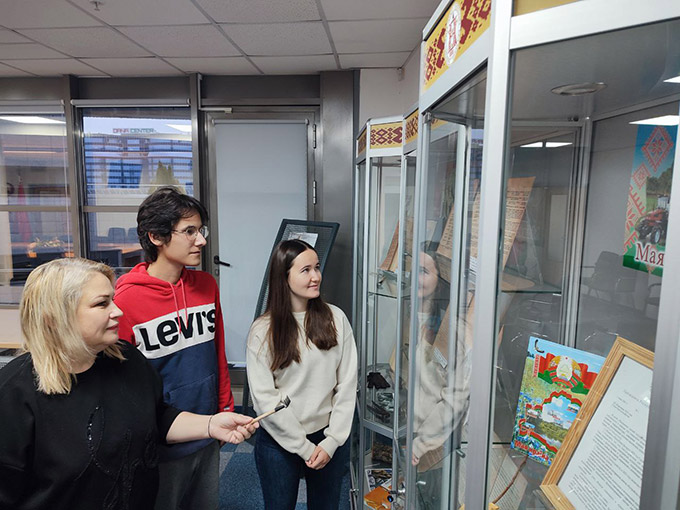 |
| 1. NARB Department Head M.A. Starostenko introduces archival staff to the exhibition |
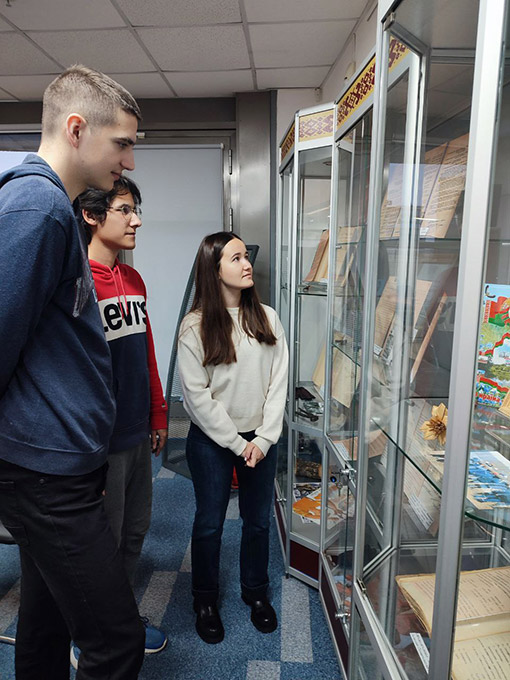 |
| 2. Archival staff viewing the documentary exhibition |
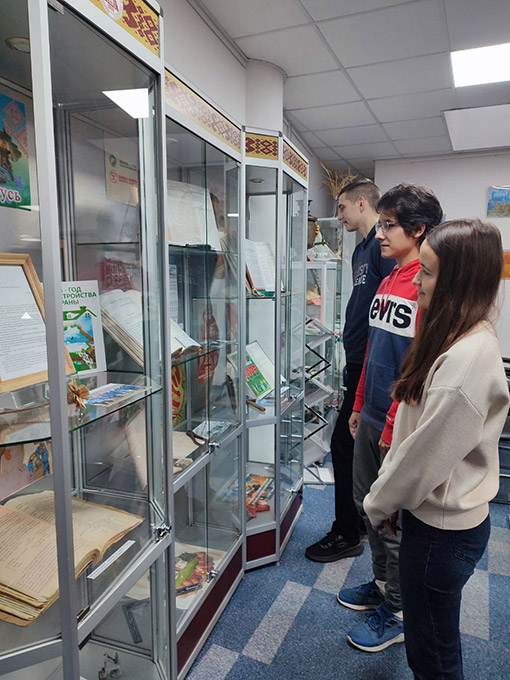 |
| 3. Archival staff viewing the documentary exhibition |
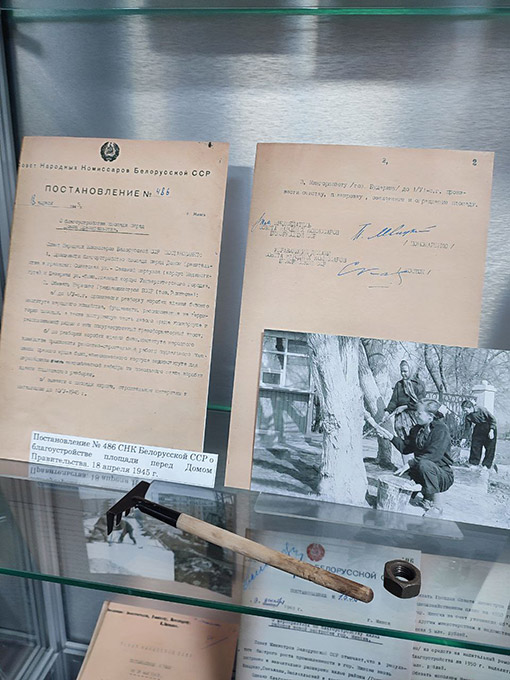 |
| 4-6. Archival documents on display |
 |
 |