
Opening of the documentary exhibition «What the textbooks won’t tell you»
On August 28, 2025, on the eve of the new school year, the documentary exhibition «What the textbooks won’t tell you» opened in the National Archives of the Republic of Belarus (hereinafter referred to as NARB).
In the 1920s, the priority tasks in the Soviet Union, including the BSSR, were the development of education in the native language, the elimination of illiteracy and low literacy, and the training of qualified personnel.
Since 1922, a four-year primary school was introduced in the BSSR, as well as a school with a seven-year term of study, and in 1926, education in primary school became compulsory. In the 1931/1932 academic year, 98% of children aged 8 to 11 were covered by primary education, which became an undoubted and visible success of the Soviet government.
During the war, school education suffered colossal damage. On the territory of Belarus, the Nazis destroyed about 7,000 schools with all their equipment, burned and plundered rich collections of educational, scientific and methodological literature. For example, in Minsk, the occupiers destroyed 78 school buildings, the Palace of Pioneers and many other cultural and educational institutions.
A bright page in the history of public education in Belarus during its occupation was written by schools in partisan zones. The first partisan schools began to open in the winter/spring of 1942.
Since the mid-1960s, the transition to universal secondary education began. The number of secondary schools increased, and their provision with the necessary teaching aids improved. In 1975, 2,300 secondary schools functioned, including more than 100 boarding schools where orphans, children left without parental care or children from low-income families studied. At the same time, measures were taken to create new stable, scientifically based curricula and textbooks. Over the years of independence, the Republic of Belarus has developed a national education system that allows citizens to realize their constitutional rights. Basic education in Belarus includes pre-school, general secondary, vocational, secondary specialized, higher and postgraduate education. The motto «Education throughout life» is not just a resonant slogan, but a life principle of Belarusians. The main principles of the development of the national education system are ensuring equal access and improving the quality of education for everyone.
The exhibition presents unique documents: Decree of the Central Executive Committee of the USSR of 1919 on improving the nutrition of children attending schools; Resolution of the Council of People’s Commissars of the USSR on the placement of schools in the estates of former landowners in 1921; Resolution of the Presidium of the State Planning Committee of the BSSR on the issue of introducing universal education in the BSSR in 1925; Report to the Chairman of the Council of People’s Commissars of the Byelorussian SSR I.S. Bylinsky on the opening of schools in the liberated areas of the republic in 1944, as well as the Questionnaire, Rules of Conduct for Students, samples of school completion certificates for different years and other interesting documents.
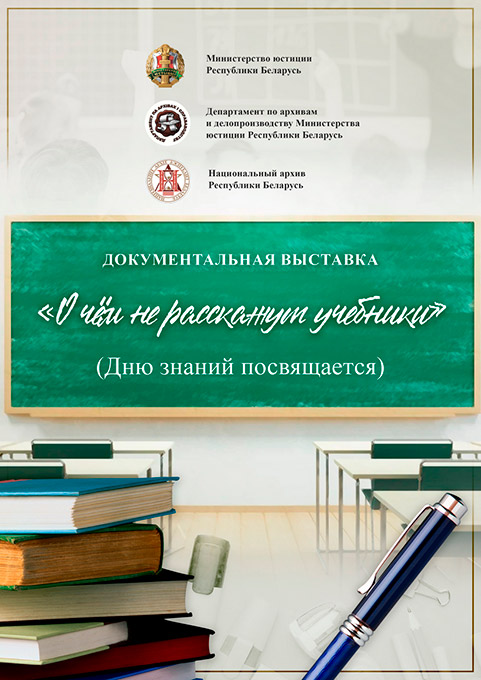 |
| 1. Poster of the exhibition «What the textbooks won’t tell you» |
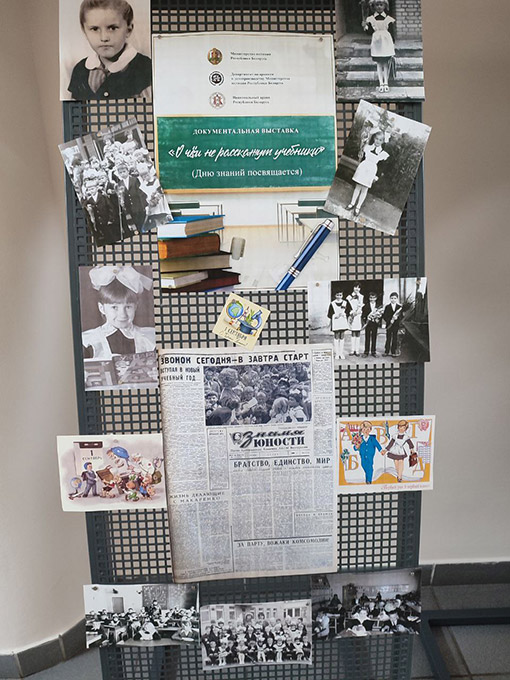 |
| 2. Documentary exhibition «What the textbooks won’t tell you» |
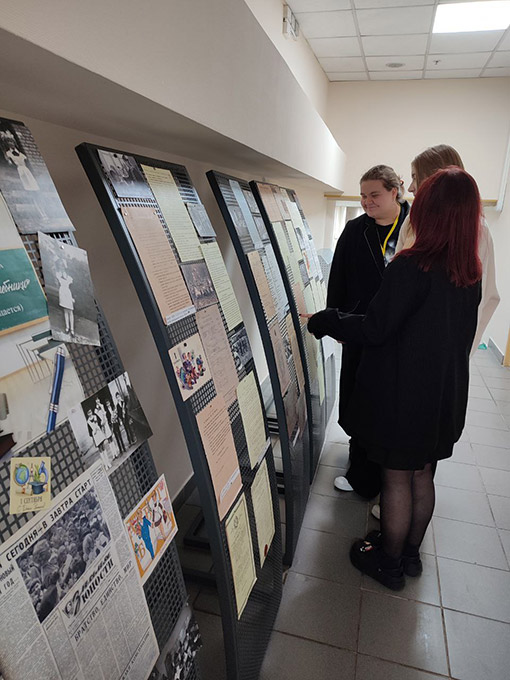 |
| 3. NARB employees get acquainted with archival documents |
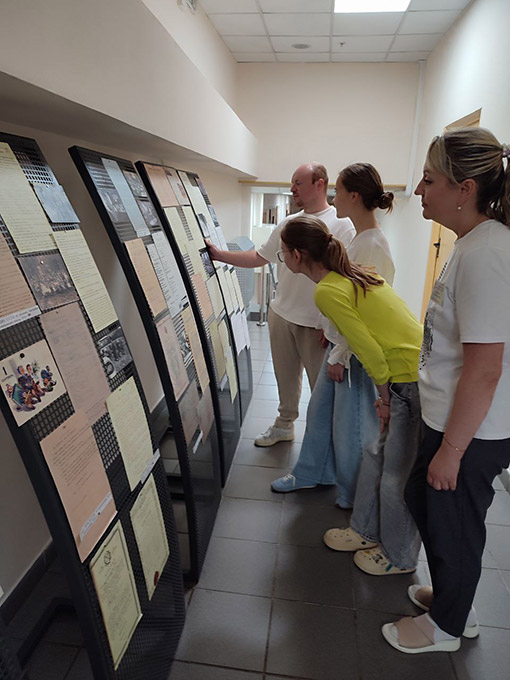 |
| 4. NARB employees get acquainted with archival documents |
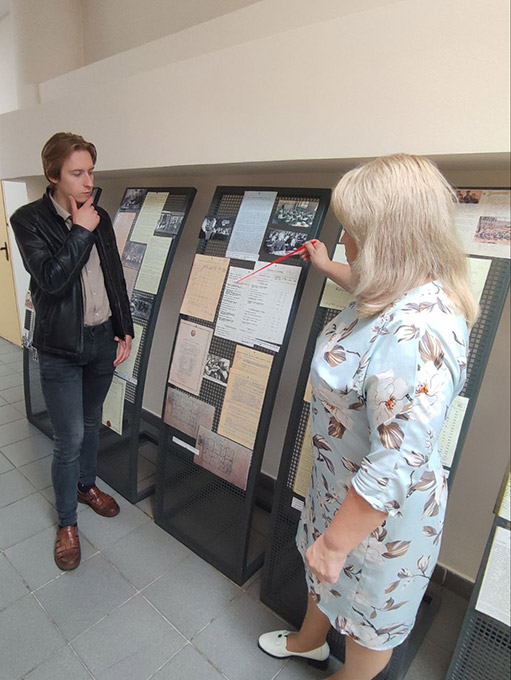 |
| 5. Head of the NARB department M.A.Starostenko talks about the most interesting documents presented at the exhibition |
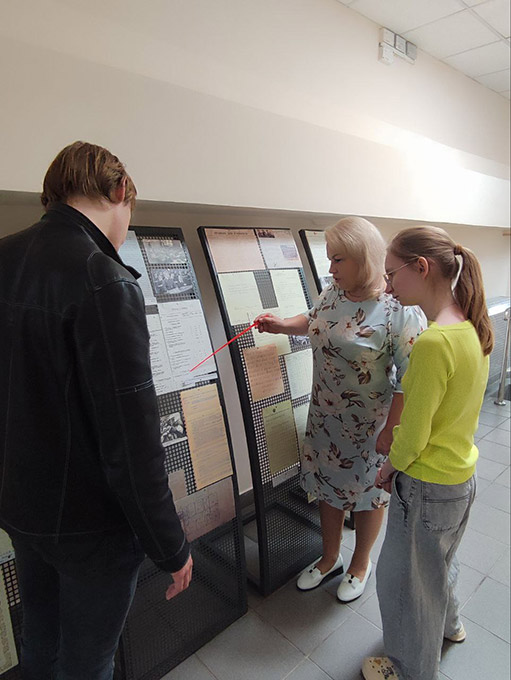 |
| 6. Head of the NARB department M.A.Starostenko talks about the most interesting documents presented at the exhibition |